The Calm After the Storm: Navigating Your Dog's Transition to Adulthood
Remember the early days?
The shoe you never wore again. The puddle you found every single morning. The barking that made your neighbors side-eye you. You were running on three hours of sleep and a pocket full of training treats, wondering if it would ever get easier.
And then… it did.
If you made it through the puppy phase, congratulations — your dog is growing up. The potty training held. The chewing slowed down. The zoomies are a little less frantic. If you’re still in the thick of it, our How to Train a Puppy: A Realistic Schedule is still here for you.
But here’s the part nobody warns you about: the chaos doesn’t end — it just changes shape.
The problems of year two and beyond aren’t usually behavioral. They’re physical. And most of them start silently in the joints.
What Actually Changes After Year One?
Many owners assume that once the puppy teeth are gone, the hard part is over. However, physiological changes continue well into adulthood.
1. The Growth Plates Close (Slowly)
This surprises a lot of owners. A dog may look fully grown at 10 months — long legs, adult face, full-size paws. But for medium and large breeds, the growth plates (the soft cartilage at the ends of the bones) don’t fully close until 18–24 months.
During that window, the skeleton is still assembling itself. Over-exercise, jumping on and off furniture, or rapid weight gain during this phase can quietly set the stage for joint trouble years later. Breeds like Golden Retrievers, Labradors, and German Shepherds are especially vulnerable.
2. Metabolism Slows Down
Neutering and spaying can drop a dog’s caloric needs by up to 25%, while their appetite often stays the same. The result: steady, easy weight gain.
Excess weight is the #1 enemy of joint health. Every extra pound multiplies the load on hips, knees, and the spine with every single step.
3. The "Invisible" Stiffness Creeps In
Puppies bounce. Adult dogs should too — but you need to watch closely for these subtle signs:
- Hesitation: Do they pause before jumping onto the sofa or into the car?
- Morning Stiffness: Is there a slow, stiff start when getting up from sleep?
- The "Bunny Hop": Do they sit with a hip cocked to the side (a "puppy sit" that never went away)?
- Faded Enthusiasm: Has their love for long walks quietly diminished?
These aren’t personality quirks or just "getting lazy." They are early signals of discomfort.
Don't Wait for "Old" to Start Caring
Here’s the mindset shift we wish we’d made earlier with Qiqi: Joint care is not a senior-dog problem. It’s a lifelong habit.
By the time a dog is visibly limping, cartilage has often been wearing down for years. Vets increasingly agree that early, gentle nutritional support can meaningfully delay the onset of arthritis — the difference between a stiff 8-year-old and an active 12-year-old.
That’s exactly why, even though Qiqi is still young, we follow our vet’s advice and build joint nutrition into the daily routine early. Think of it less like medicine and more like a daily multivitamin for the body that has to carry a dog around for 12+ years.
What to Look for in a Daily Joint Supplement
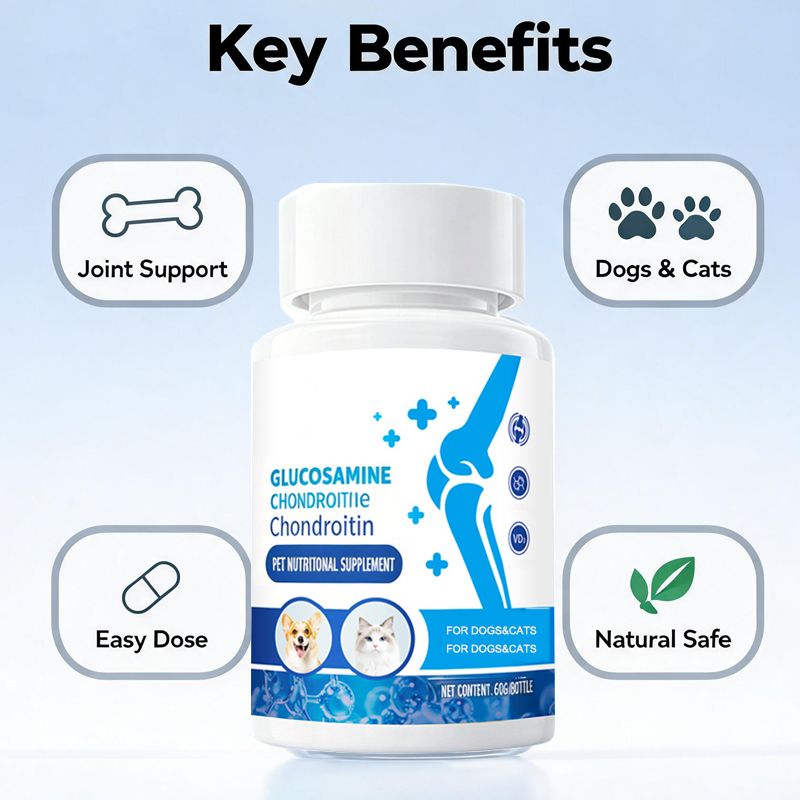
If you’re shopping around, a quality joint chew should contain this "Golden Quartet":
- Glucosamine: Supports cartilage repair and cushioning.
- Chondroitin: Helps cartilage retain water and resist breakdown.
- MSM: Provides natural comfort support for stiff, sore joints.
- Omega-3s: Helps keep the inflammatory response balanced.
- Palatability: A flavor dogs actually eat — there's no point if you’re fighting them over it every night.
A Simple Adult-Dog Care Reset
You don’t need a complicated protocol. After year one, four small habits do most of the heavy lifting:
- Manage weight like it matters — because to the joints, it does.
- Match exercise to the breed — long leashed walks over endless ball-fetching for big-breed teens.
- Add a daily joint chew — a small preventive investment, not a rescue operation.
- Watch the morning — stiffness on waking is your earliest warning light.
> Pro Tip: If gut health is already on your radar, our Pet Probiotic Powder: What We Learned pairs naturally with this routine. Digestion and mobility are both part of the "is my adult dog thriving?" picture. And if you remember the stress spikes from puppyhood (see Understanding Your Puppy’s Stress Response), many of those same tension signals can resurface as physical discomfort later.
The 30-Second Check
Tonight, when your dog settles down, take 30 seconds to watch them get comfortable — and get back up.
- If they rise smoothly and move freely, you’re doing great. Keep the habits going.
- If you notice a hesitation, a wince, or a "slowing down" that wasn’t there six months ago, don’t write it off as "just age."
Start the preventive routine today. Your future self — and their wagging tail — will thank you.
Ready to Build the Habit Early?
Our vet-formulated Joint Support Chews are designed for exactly this: a tasty, daily preventive for growing, active, and aging dogs.
Shop Joint Support Chews Now →
Have questions about your dog’s stage of life? Drop their age and breed in the comments below — we read every one!