By [AUTHOR NAME] - [MONTH YEAR]
Puppy Bad Breath During Teething: What's Normal, and the Change That Isn't
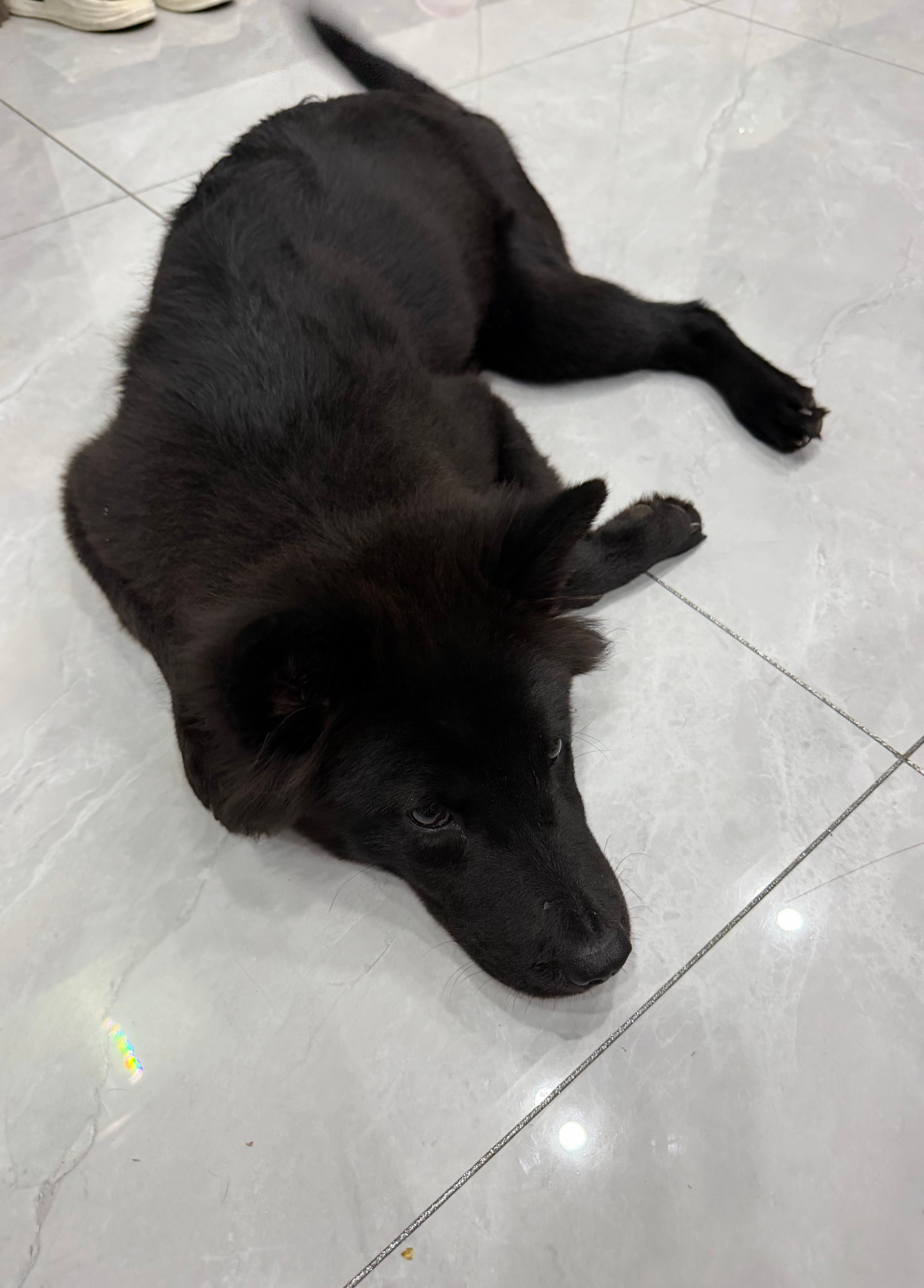
Our puppy [DOG NAME] is five months old, and the only reason we know her breath has changed is that she licks us.
That sounds like a joke. It isn't. She gets in our faces constantly - after meals, after naps, mid-zoomies - and somewhere in the last week, the smell coming out of her mouth stopped being the smell we had gotten used to. We did not go looking for a symptom. It was delivered to us at close range, several times a day.
Here is the part that made us pay attention. She has been losing teeth for about a month. Nothing smelled then. Each little tooth loosened and came out in about two or three days, which is quick, and there was no odour around any of it.
Then the shedding slowed down, and the smell started.
That order of events is the entire reason this page exists.
Where we stand, before anything else
Two disclosures. This is general information, not veterinary advice, and we are not going to diagnose our own dog in public - or yours. Second, we should say it plainly: we make and sell dog supplements. We do not sell anything for teeth, and there is no product link on this page. The honest version of this article has nothing to sell in it.
And one more thing, because it matters for how you read the rest. We have not seen the vet about this yet. We are booking it. That is the conclusion we got to, and the rest of this page is how we got there - not a treatment plan we are handing out.
Why a teething mouth can smell at all
Three mechanisms, all ordinary, none of them alarming on their own:
- Healing sockets. When a baby tooth comes out, it leaves a small wound in the gum. Blood has a metallic smell. A mouth in the middle of a shed can carry a faint trace of it.
- Gum inflammation. Erupting teeth push up through gum tissue, and inflamed gum is gum that plaque sticks to more easily.
- New gaps. A mouth in transition is full of little spaces that were not there a month ago. Food goes into spaces.
None of these produce a strong, rotting smell. None of them should still be there a week later. That distinction - mild and passing versus strong and persistent - is the one the veterinary guidance keeps drawing, and it is the one we could not get past.
The clue we could not ignore: the timing
Here is the thing we kept coming back to.
A baby tooth is supposed to fall out because the adult tooth growing underneath it dissolves its root. The root goes first, so the tooth has nothing left holding it in. That is why it takes a couple of days - the tooth is not being pushed out, it is being unanchored. What we saw was exactly that: loose, then gone, no odour, no drama.
But that only happens when the adult tooth comes up in the same spot. Sometimes it comes up beside it. When that happens, the root of the baby tooth is never dissolved. The baby tooth never loosens. And you end up with two teeth occupying the space that was built for one.
Overlapping teeth are crowded teeth, and crowded teeth have crevices. Food gets wedged in the crevices and sits there. That is not a figure of speech - a retained baby tooth trapping food and plaque between itself and the adult tooth is the mechanism the veterinary literature gives for why it smells, and why it predisposes a dog to dental disease later on. Retained baby teeth are most common in the canine teeth, and small breeds are at higher risk than large ones.
We are not saying that is what she has. We cannot know that, and neither can you from the outside. What we can say is that it is the explanation that fits the timeline we actually lived through: a month of clean, fast shedding, and then a mouth that stopped shedding and started smelling.
If a tooth is sitting next to a food trap, "it's just puppy breath" is the wrong conclusion to build on.
The problem with the name "puppy breath"
"Puppy breath" started as a term of endearment, and it is a good one - the sweet, milky smell of a very young dog is real. But a cute name does a quiet thing to your judgment. It turns a description into a dismissal. Once the smell has a nickname, it stops being information.
This is worth being deliberate about, because AAHA notes that bad breath is often one of the first signs owners notice when dental disease is developing. The signal arrives before the pain does. Dogs hide mouth pain unusually well - they keep eating with a sore mouth - which is exactly why the smell is often the first thing anyone catches.
So the useful question is not "does it smell?" Mild mouth odour is part of having a dog. The useful question is "is it the same as it was last week?" Ours was not, and that mismatch is the whole signal.
Not every smell comes from the mouth
Worth knowing, and worth not self-diagnosing:
- A sweet or fruity smell, especially alongside a puppy drinking and urinating more than usual, points at something that needs bloodwork rather than a toothbrush.
- A urine-like or ammonia smell is the same kind of finding.
- A musty smell, with yellow gums or vomiting, is the same kind of finding again.
Those patterns are not a dental question, and no chew or brushing routine will answer them. A sudden change in the character of the smell - not just the strength of it - is a reason to have a vet look and decide what to test.
Three things we are not doing
Teething articles usually hand you a to-do list. We would rather give you the three things we decided against, because those are the ones with a real downside:
1. We are not pulling anything loose. A baby tooth hanging by a thread is genuinely tempting - it looks like it would take a second. But a root that snaps off stays in the gum, underneath, where you cannot see it and cannot fix it. That is not a home job.
2. We are not giving her anything hard to chew. Veterinary dentists have a one-line rule worth remembering: do not let your dog chew anything that will not bend. Bones, antlers and nylon are the standard examples, and they fracture teeth - both the adult ones she is growing and the baby ones she still has. A cracked adult tooth is permanent. A broken baby tooth that exposes the pulp does not heal on its own. Hard chewing is the opposite of a safe default during a month when her mouth is a construction site.
3. We are not using our own toothpaste. Human toothpaste is built around fluoride, and a lot of it contains xylitol, which is toxic to dogs. It is an easy mistake to make at eleven at night, and it is the kind of mistake that matters. Dog toothpaste is a separate product for a reason.
What we are doing instead
Booking the exam. Not as a last resort after a month of home remedies - first, because the answer determines everything else. We will specifically ask two questions: is there a tooth that should have come out and has not, and is the smell coming from between two teeth rather than from the gum.
Getting her used to having her mouth handled. Lifting the lip for a few seconds, most days, followed by a treat. That is not treatment and it will not fix anything. It is the thing that makes a vet's exam - and eventually brushing - possible at all, and it is much easier to build at five months than at two years.
Asking about brushing timing rather than starting one. Standard guidance is daily brushing with a soft pet toothbrush, and AAHA rates it the most effective home measure for reducing plaque. But a mouth in the middle of a shed has open sockets, and we would rather have the vet tell us when to start than guess. That is a question for the appointment, not for us.
We do not sell anything for this
Our other pages end with a product link, and this one does not, on purpose. A bad-breath article that finishes with a chew is not an article - it is an advertisement wearing an article's clothes. That is a real category of page on the internet and we would rather not add to it.
So if you are going to spend money on a puppy's mouth this month, spend it on the exam. That includes the version of this where the answer is "there was nothing to find." A vet visit that ends in reassurance is not a wasted vet visit.
FAQ
Is bad breath normal when a puppy is teething?
A mild change can be, yes. Teething means inflamed gums and tiny amounts of blood, and a mouth in the middle of a shed can smell faintly different for a few days. What is not normal is a strong or rotting smell that lasts a week or more, or any change in smell that comes with red or bleeding gums, drooling, pawing at the mouth, or a puppy who has gone off her food. Those are reasons for an exam, not symptoms to wait out.
My puppy's breath got worse after her teeth came out. Does that mean something is wrong?
Not necessarily - but it is the exact pattern worth asking about. The reason is mechanical. A baby tooth normally leaves because the adult tooth beneath it dissolves its root first. When the adult tooth erupts beside it instead, the root is never dissolved, so the baby tooth stays, and two teeth in one spot trap food and plaque. That is one of the recognised explanations for a smell that begins after shedding slows down.
Can I wait for a retained baby tooth to fall out on its own?
That is the one thing not to do. A baby tooth still present after the adult tooth has erupted next to it does not reliably come out by itself, and the reason to act early is not cosmetic - the sooner it is removed, the better the chance the adult tooth settles into the right position. It also matters for the mouth's long-term future, since trapped food and plaque around a crowded tooth is how dental disease gets started. This is a vet decision and it is the kind that has a clock on it.
Should I buy a dental chew to deal with the bad breath?
Not as a way of finding out what the smell is. Dental chews and other plaque-control products can slow the buildup of plaque, but they cannot tell you whether you are looking at food wedged between crowded teeth, a retained baby tooth, or something else entirely. And the guidance is consistent that chews do not substitute for brushing or for a professional assessment. Buy the exam first; ask about chews afterwards.
Can a five-month-old puppy have dental disease?
Gingivitis, yes. Gingivitis is inflammation of the gums caused by plaque at the gumline, AAHA describes it as the earliest stage of periodontal disease, and it shows up as red gum margins and bad breath. What is much less common at five months is the established periodontal disease that most dogs have some degree of by the time they are three. That is the argument for dealing with this now rather than later: the mouth you are looking at at five months is the one you are going to be maintaining for the next twelve years.
How do I check my puppy's mouth at home?
Lift the upper lip on both sides in good light and look at the gumline. Pink and firm is the normal; red, swollen or bleeding is not. Look for two teeth where there should be one, a chipped or discoloured tooth, or anything wedged between teeth. And respect the limit of the exercise: looking can tell you that something deserves an exam. It cannot tell you what it is.
Why we wrote this down
We nearly filed it under "puppy breath."
The name is the problem. It is a warm label for a normal stage of growing up, and it makes a change in smell sound like a mood rather than a reading. Ours changed a week ago, in a mouth that had spent a month changing in a completely different way - and that mismatch is the only reason we are not still calling it normal.
We will update this page after the appointment, including if the answer is that there was nothing to find. A page about a symptom that goes quiet once the vet says it is fine is not much of a page.
Related Reading
- How to Read a Dog Joint Supplement Label (and the One Line to Check First)
- Glucosamine Sulfate vs. Hydrochloride: Why the Form on the Label Matters
--- DISCLOSURE / DISCLAIMER (keep visible at the foot of the page) ---
This article is general information for dog owners and is not veterinary advice. It does not diagnose or treat any condition. Talk to your vet about your dog's specific situation.
[BRAND] makes and sells dog supplements. No product is linked from or recommended in this article. This article was written by [BRAND] and has not been reviewed by a veterinarian - the veterinary sources it draws on are listed below.
--- REFERENCES (link each source) ---
- American Animal Hospital Association. Dental care guidelines and home oral care guidance - daily brushing, gingivitis as the earliest stage of periodontal disease, prevalence of periodontal disease by three years of age. [ADD OFFICIAL LINK]
- VCA Animal Hospitals. Teeth, teething and chewing in puppies - deciduous and permanent tooth counts, eruption timeline, retained deciduous teeth, hard chew warnings. https://vcahospitals.com/know-your-pet/teeth-teething-and-chewing-in-puppies
- Merck Veterinary Manual. Retained deciduous teeth in dogs - displacement of permanent teeth, crowding, food trapping, and why prompt removal matters. [ADD OFFICIAL LINK]
- American Veterinary Dental College. Periodontal disease and home care guidance, including the "nothing that won't bend" chew rule. [ADD OFFICIAL LINK]