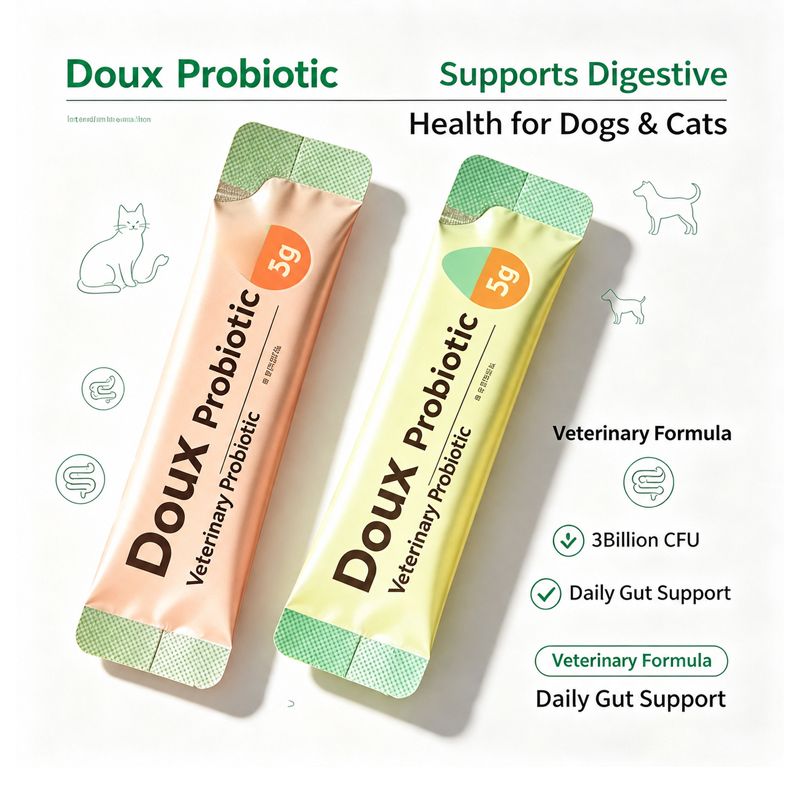
As pet health care grows more sophisticated, probiotics are no longer the preserve of human medicine. From puppies and kittens to senior companions — and from giant breeds to the smallest indoor cats — a well-formulated pet probiotic powder has become a staple in many households' daily wellness routines.
Building the Gut's Defensive Barrier
A pet's intestinal tract is home to billions of microorganisms that form a complex, finely balanced ecosystem. When that balance is disturbed — by a change in diet, environmental stress, medication, or simply the passage of years — harmful bacteria seize the opportunity to multiply, triggering diarrhea, constipation, loose stools, gas, and a range of other digestive complaints. Because of the gut–immune axis, these disruptions can even ripple outward and weaken whole-body immunity.
A quality probiotic powder helps restore the gut's dominant beneficial flora by delivering carefully selected strains. Consider what each one brings to the table:
- Bacillus coagulans forms hardy spores that survive stomach acid and bile, germinating only once they reach the intestine, where they take root and competitively block pathogens from adhering to the gut wall.
- Enterococcus faecium rapidly consumes free oxygen in the gut, creating a hospitable environment for the oxygen-sensitive beneficial bacteria that thrive there.
- Lactobacillus plantarum and Saccharomyces cerevisiae produce lactic acid, bacteriocins, and other metabolites that directly inhibit harmful organisms such as Salmonella and E. coli.
Working in concert, these strains lay down a living "bioprotective film" along the intestinal lining, safeguarding gut integrity through both physical barriers and biological antagonism.
Restoring Digestive Rhythm and Easing Discomfort
Probiotics exert a two-way influence on gut motility. In pets with acute or chronic diarrhea linked to microbial imbalance, they help ease inflammation and reduce excessive fluid secretion by restoring microbial equilibrium and strengthening the mucosal barrier. In functional constipation, short-chain fatty acids produced by certain strains gently stimulate peristalsis while softening the stool. Many pet owners report that supplementing with probiotics during food transitions, after deworming, or through stressful periods such as boarding or moving significantly reduces the frequency of digestive upsets.
Lowering Gut Sensitivity to Calm Allergic Responses
The gut is far more than a digestive organ — it is the body's largest immune organ, with roughly 70% of immune cells residing in gut-associated lymphoid tissue. Research shows that microbial dysbiosis can increase intestinal permeability, a condition commonly known as "leaky gut." When this happens, incompletely digested food proteins and allergens slip into the bloodstream, driving symptoms such as itchy skin, ear inflammation, and compulsive licking.
Consistent probiotic supplementation helps repair the tight-junction proteins that seal the spaces between intestinal cells, reducing permeability. At the same time, it supports a balanced Th1/Th2 immune response and curbs IgE-mediated allergic reactions. For dogs and cats managing atopic dermatitis or food sensitivities, a probiotic powder is therefore often used as a complementary strategy — tempering an overreactive immune system at its source.
A Companion for Every Life Stage
Probiotics deliver value across a pet's entire lifetime: supporting the establishment of healthy gut flora from the weaning period in puppies and kittens, maintaining digestive stability throughout the adult years, and improving nutrient absorption when age-related gut changes set in during the senior phase. High-protein, grain-free formulations are also designed to suit a range of dietary styles while avoiding the introduction of unnecessary allergens.
The Right Product — and the Right Expectations
It is worth emphasizing that probiotics are not a medicine; their benefits depend on consistent, ongoing supplementation. Choosing products certified under recognized quality systems such as GMP, HACCP, and ISO helps guarantee strain viability and purity — the very foundation of probiotic efficacy. When a pet presents with serious digestive symptoms, veterinary care should always come first, with probiotics serving as a valuable complement to the veterinarian's treatment plan.