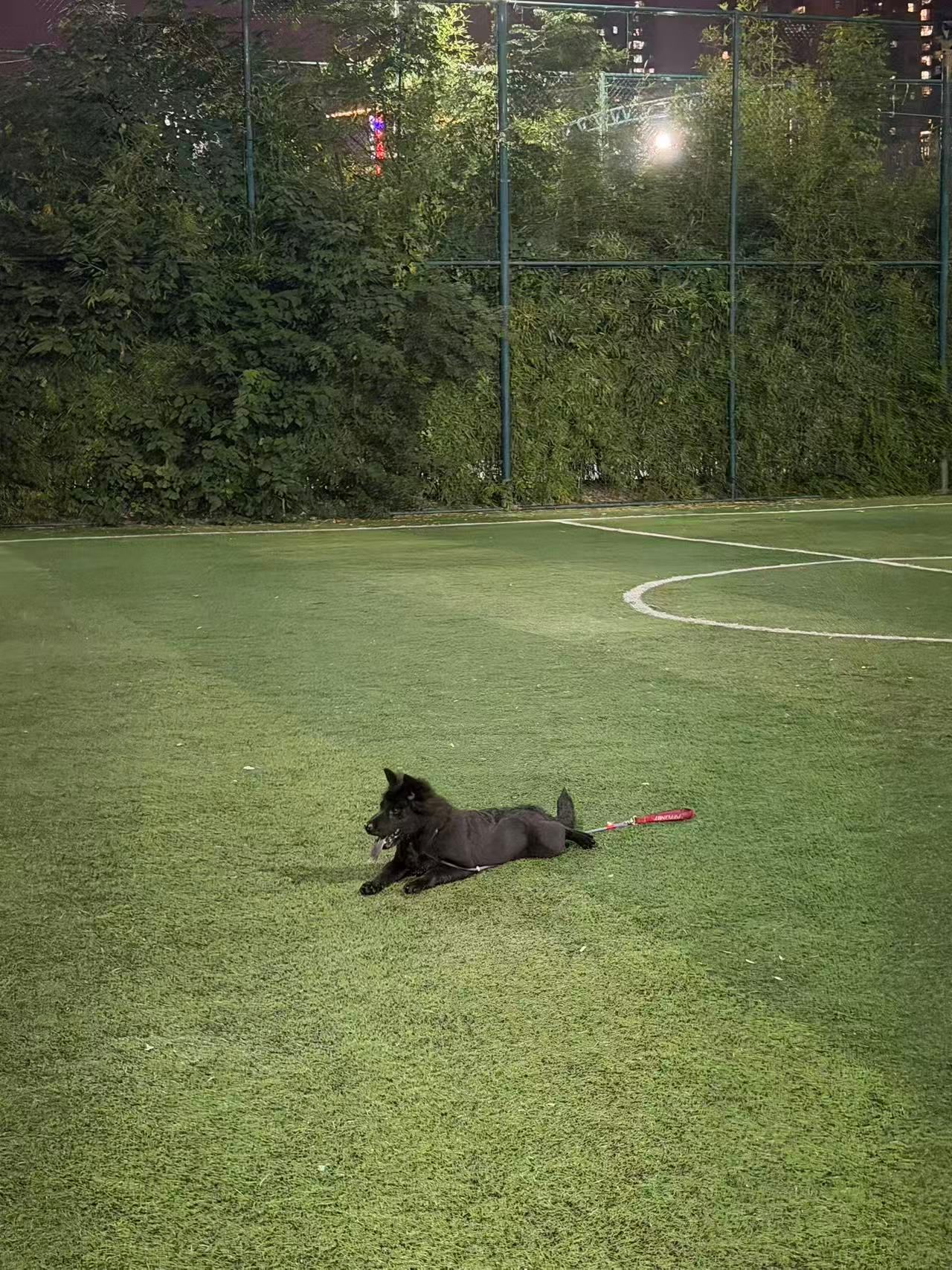
My Dog Waited in the Rain: Why Dogs Wait for Us, and What They Need
From the Qiqi's Growth Diary series
The rain started as a thin drizzle — the kind that looks like nothing and soaks you through anyway.
I parked the e-bike at the curb and crossed the road to the bank. A short errand: fifteen minutes, maybe twenty.
Qiqi stayed. She picked the driest corner of the steps beside the bike, turned in a slow circle, and sat down. Waiting is simply what she does.
When I came back out she was soaked to the ribs — coat flat, ears dripping. And she was wagging. Not a polite flick of the tail: her whole back end swung with it, and she circled me twice before we could go anywhere. She had been cold for twenty minutes and did not seem to mind, because I was back.
I have thought about that short ride home more than any long one.
Why Does My Dog Wait for Me?
The first reason is that we are more than food providers to them. Dogs form attachment bonds with specific people, and those bonds behave a lot like the ones human infants form with a parent. In a well-known study that adapted the infant "strange situation" test for dogs, the dogs explored more confidently when their owner was in the room, showed clear distress when the owner left, and greeted the return with outsize joy. The conclusion was simple: a dog uses her owner as a secure base.
The second reason is duller, and probably more accurate. Dogs are excellent at reading the shape of our day. Qiqi knows roughly when I leave, roughly when I come back, and where I usually reappear. Some of that loyal waiting is devotion. Some of it is a dog who has learned the timetable and parked herself in the right spot.
> One honest caveat. Waiting calmly for a while is normal. Waiting that comes with pacing, whining, chewed door frames, or a dog who stops eating while you are gone is a different thing altogether — and that is a question for your vet, not a guess from a blog.
What I Would Do Differently Next Time
Coming home wet was a small failure of planning on my part, and it is easy to fix.
- Keep something over the bike. A folded cover takes up no space in the basket and turns "soaked" into "damp."
- Errands with a dog are a shelter problem, not a willpower problem. The bank with an awning, the shaded side of the building, the doorway that is not in anyone's way — I had walked past all three to get to the spot I always use.
- Towel first, ears too. Two minutes with a towel by the door turns a wet walk into a non-event. Dry the ears properly rather than the coat: moisture that sits in an ear canal is a common reason a wet week ends in a vet visit. If she starts shaking her head or her ears smell, book the visit instead of guessing.
The List That Beats Anything You Can Buy
None of this needed a product, and none of it cost me much:
- Weight. The single biggest lever on how a dog's joints hold up over a lifetime — and it is decided by us, not by them.
- The daily walk. Even in drizzle. It does more for her mood and her body than anything on a shelf.
- The annual exam. The boring check-up catches more, earlier, than anything you can order online.
- Consistency. Her trust is built out of the same small thing, done at the same time, over and over. That is the whole trick, and it is not a product.
The Part Where We Sell Something
We make dog supplement chews. That is the business behind this blog, so take everything here with that in mind.
Nothing about a wet Tuesday makes a chew more necessary, and I am not going to pretend otherwise. If you remember one thing from this page, make it the list above. A supplement is a small, optional layer on top of those habits — never a substitute for them — and if your dog has a health problem, that is a vet's call, not a label's.
The one thing I can offer from the shop side is not a product but a habit: read the label before you buy anything, including ours.