Dog Itchy After Playing Outside? What We Ruled Out First
The short version: A mud-and-water weekend, then five days later the scratching started. The exam came back clear and nothing needed treating. Here is what we logged, what we had wrong about prevention, and the four signs that would send us back.
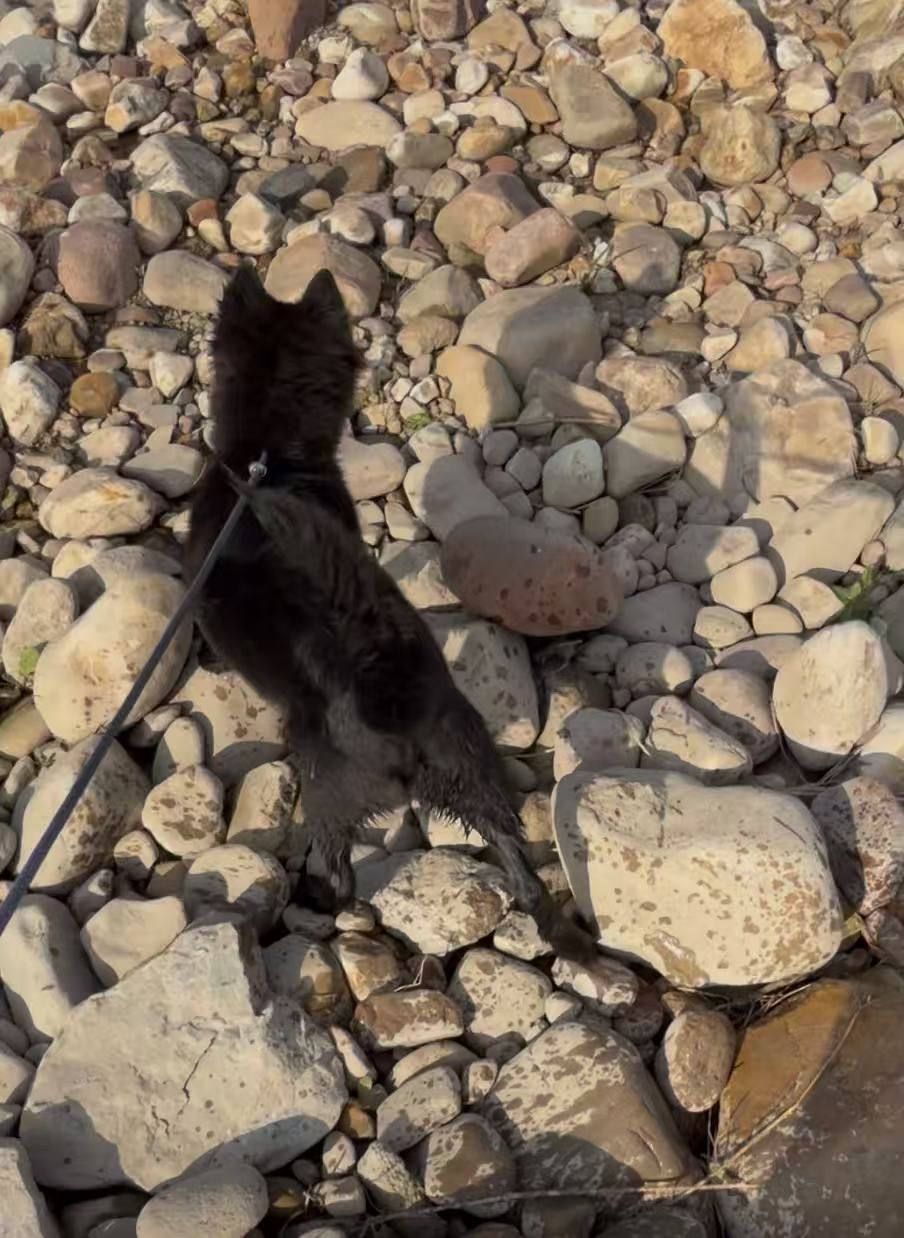
Qiqi came home from the long weekend filthy, exhausted and extremely pleased with himself. About five days later he started scratching — not constantly, not everywhere, just enough that we noticed it, and then noticed that we were noticing it.
So we had him looked at. The exam came back clear: no fleas, no visible lesion, nothing that needed treating. The guidance was as reassuring as it gets — nothing to do right now, and if the occasional itchy patch bothered us, a topical spray was a reasonable option. That should have been the end of it.
Two things before we start. This is general information, not veterinary advice, and we are not going to diagnose our own dog in public or yours. The second needs saying plainly, because it changes how you read what follows: we make and sell dog supplements. The only skin product we make is a daily coat-conditioning chew, built for slow, everyday nutrition over weeks. It is the wrong tool for a week like this one — and we would rather say so than let the link at the foot of this page pretend otherwise.
First: "he's up to date on worming" does not explain the itch
We had this wrong, and we think most owners do too.
Parasite prevention is not one thing. It is several overlapping products covering different parasites: some cover fleas and ticks and nothing else; some cover heartworm and intestinal worms and nothing else; some are all-in-one. All three are legitimate. None of them covers pollen, grass, sand, or skin that stayed damp.
And here is the half we got wrong: not everything in the water is off the list either.
- Parasites your preventive covers — fleas, ticks and the worms on the label. This is the only bucket "up to date" speaks to.
- Parasites no routine monthly preventive is labelled for. Fresh water carries free-swimming flatworm larvae released by infected snails. They are parasites — they belong on a prevention list, and they are on none. In dogs, one of them, Heterobilharzia americana, does not stop at irritating the skin: dogs are a true host, the worm matures inside the body, and infection shows up gradually as lethargy, weight loss, diarrhoea, vomiting or dark, tarry stool. Left untreated it can be fatal, and routine faecal flotation usually misses it — it is found by faecal PCR. That is not a reason to panic after every swim. It is a reason to mention the water when you talk to your vet, and to take digestive signs after fresh water seriously.
- Things that are not parasites at all — pollen, grass, sand, algae, and plain moisture on the skin.
So "we just did the worming" and "he is scratching" are answers to two different questions. The useful follow-up is not did we worm him but which parasites does this product actually cover, and is there a gap we assumed was closed. Two smaller notes: spot-on products can cause a local reaction at the application site, so tell your vet if the scratching concentrates on the neck or between the shoulder blades — and swimming and bathing can affect how well a spot-on works, so check the label timing rather than assume coverage is intact.
Second: after a wet weekend, "contact" and "damp" are usually the whole story
A dog who has been digging and swimming comes home with two things on his skin: stuff that touched it, and moisture that stayed on it.
The "stuff" is the obvious half — mud, grass, pollen, whatever was in the water. The other half is the one owners underestimate: a wet coat holds water and warmth against the skin, and a dense coat that stays damp — especially where hair is thin or skin folds over itself — keeps that microclimate going for hours after the dog looks dry from across the room. That is why the spots that itch first are the same spots every time: the belly, the groin, the armpits, the muzzle, the paws and between the toes, and the ears. Thin hair, warm, slow to dry.
It also gives you a timing test worth knowing:
- Itching within hours of the water fits a contact or moisture pattern.
- Itching several days later, especially with no obvious patch, fits it less well — and is a better reason to ask your vet what else could be going on.
Ours started around day five, which is, annoyingly, the second category.
What "the vet said it's fine" actually means
"It's fine" is doing a lot of work in one short sentence.
A clear exam means something specific, and good: on the day of the exam, there was nothing visible that needed treating. No infection, no parasite burden, no lesion. That is real information, and it is why we did not panic. What it does not mean is that the itch is guaranteed to be nothing, that it will resolve on its own, or that no cause exists. An exam is a snapshot — the best one available, and not a guarantee.
The guidance we got had two parts: nothing needs treating, which is why there was no prescription; and if an occasional patch is bothering you, a topical spray is reasonable — a statement about comfort, not about cause. A spray is local and symptomatic: it does not tell you why the skin is reacting, and it does not change anything underneath.
One safety note, because it comes up every time a dog starts scratching: do not reach for human anti-itch creams, tea tree oil, or a leftover tube of something. Dogs lick, and several things that are fine on human skin are not fine in a dog's mouth — tea tree oil in particular is toxic to dogs and can cause wobbliness, tremors and depression of the nervous system. If your dog has swallowed a human product, that is a poison-control call rather than a wait-and-see: ASPCA Animal Poison Control Center on (888) 426-4435, or Pet Poison Helpline on (855) 764-7661.
What we did instead: a log
We did not buy anything. We started writing things down, which turns out to be the most useful thing available to an owner here — because the pattern matters more than any single scratch. Five columns, five minutes a day:
- Where. Not "scratching" — which part. Belly, flank, ears, feet, base of the tail, one spot.
- How often, and when. Twice this morning, nothing until evening, four times in ten minutes. Timing is data.
- What happened in the 30 minutes before. Woke up, came in from the yard, after eating, after a walk. This column finds triggers.
- What the skin looks like. Red, normal-coloured, small bumps, scabby, broken, greasy, smelly, dry. Photograph it in good light — skin looks different at 11pm under a lamp.
- Anything else that changed. Appetite, energy, stool, water, mood. This tells you whether the skin is the whole story or a symptom of something larger.
The pattern is what a vet can act on. "He's itchy" gets a general exam. "It started five days after the lake, it's concentrated on the belly and one armpit, it's worse in the evening, and there are small bumps in one spot" is a place to start.
We also did the unglamorous mechanical things, which cost nothing: rinsed him with clean water and dried him properly — down to the skin at the ears, between the toes and in the folds — kept the coat brushed, and washed his bedding. A dog who has been in a pond has had a pond in their bed by the end of the week.
The four things that would send us back
"No need to treat" is a decision about today. These are not about comfort, which is why they would make us book a follow-up:
- The scratching stops being occasional. If it interrupts sleep or meals, or he cannot settle, that is a different problem from "he scratches sometimes."
- The skin visibly changes. Broken skin, crusting, a raw or oozing patch, a strong smell, or an area getting larger. Damaged skin can get infected, and that needs a vet rather than a spray.
- A new and separate problem appears after fresh water. Vomiting, diarrhoea, weight loss or unusual tiredness in the days after a lake, pond or slow river is worth a call even if the skin is the last thing on your mind. Fresh water carries things no parasite preventive addresses: the flatworm infection above; leptospirosis, a bacterial infection spread through water and urine that affects dogs and people alike and is worth asking your vet about as a vaccine; and cyanobacteria, or blue-green algae, which can kill a dog within hours of swallowing contaminated water and for which there is no antidote. If the water looked like foam, scum, paint or pea soup, or smelled bad, and your dog went in, rinse him with clean water immediately, stop him licking his fur, and call a vet rather than watching.
- Two weeks pass without settling. Not "still scratches twice a day" — still scratching, same trend, no improvement.
We would also go back if the spot got worse after the spray: a tool that makes something worse belongs with a vet.
Why we did not add a supplement in week one
This part is about our own category, so read it with that in mind.
Skin and coat supplements — omega-3s, biotin, zinc and the rest — work on a slow clock. Skin cells turn over on a cycle measured in weeks, not days, and the honest evaluation window for a skin and coat product is four to eight weeks, not four days. A product that promises to resolve one itchy weekend is not describing what a skin and coat formula can do.
So we did not buy anything in week one, and we would suggest the same to you. If you are standing in a bad week with an itchy dog, a supplement is not the tool in front of you. A diagnosis is.
What we do use sits in a different category from this week's itch: omega-3 with a disclosed EPA and DHA number — not "fish oil 500 mg", which is the weight of the carrier rather than the dose; two numbers in milligrams, or it is not information. Biotin and zinc, the ingredients associated with skin and coat condition rather than anything acute. A bathing routine that matches the dog rather than the calendar. And a parasite plan with the gaps checked.
And the honest version of "what works": the biggest inputs to a dog's skin condition are the boring ones. How often you bathe, whether you dry them properly, whether the parasite coverage has a hole in it, and whether a recurring problem has ever been properly diagnosed. Those four are worth more than any tub of soft chews we could sell you, and none of them are sold by us.
FAQ
Why is my dog itchy after swimming?
Water carries whatever was in it — pollen, plant matter, algae, and in some fresh water, flatworm larvae from snails. Mud and grass leave material on the skin. And a wet coat holds moisture and warmth against the thin-haired, folded places that dry last: the belly, groin, armpits, muzzle, paws and ears. Most post-swim itching is contact plus moisture, which is why rinsing and drying properly does more than owners expect.
Can my dog be itchy if they're up to date on flea and tick prevention?
Yes. Those products cover what their label says. They do not cover pollen, grass, algae or damp skin, because those are not parasites — and some parasites are not on prevention labels either. The flatworm larvae freshwater snails release are not covered by any routine monthly product, which is why digestive signs after a lake are a vet call rather than a wait-and-see.
Should I bathe my dog after every swim?
Rinsing with clean water and drying thoroughly is the part that matters most. A full shampoo bath every time is not necessary and can dry the skin out; how often to shampoo depends on the coat and the skin, so ask your vet rather than guess. The step people skip is drying — not towel-drying, but getting down to the skin at the ears, between the toes and in the folds.
Can a skin and coat supplement help with an itch my dog has right now?
No — not for an itch that is happening now. Skin and coat supplements support normal skin condition and coat quality over time, and the honest timeframe is four to eight weeks: the length of a skin cell cycle, not the length of a bad week. If your dog is itchy now, the useful first step is a diagnosis.
The short version
Our dog came home muddy and happy, and five days later he was scratching. We got him checked, nothing needed treating, and we spent a week doing the least dramatic thing available: writing down where and when, drying him properly, washing his bed, and waiting to see which way it went.
We are not going to pretend that is a satisfying answer, and we are not going to sell you something to make it feel more active. If a piece of content tells you a supplement fixes a week like this one, that content wants your money more than it wants to be right.