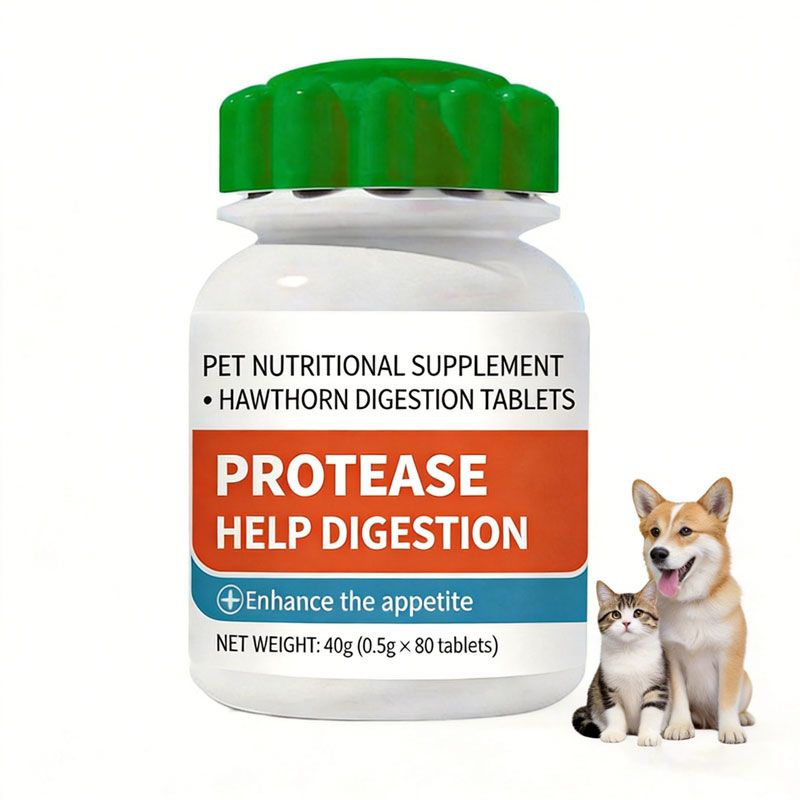
Digestive Supplements for Dogs and Cats: What to Check on the Label
Digestive supplements are one of the busiest corners of the pet health aisle — enzyme blends, herbal tablets, promises of better stools and better appetites. Before the promise, here is the evidence, briefly, then the part that actually helps: how to read the label in front of you.
One thing first — we sell digestion products, including the tablets pictured above. Keep that in mind as you read.
Do digestive supplements actually work for dogs and cats?
For a healthy pet, the honest answer is: the evidence is thinner than the marketing.
A healthy dog or cat already makes the enzymes that do this job: the pancreas releases protease, lipase and amylase after every meal, and that system covers a complete, balanced diet without help. The most direct test found nothing to add: in a 2017 study, healthy adult dogs given plant- or animal-sourced enzyme supplements showed no change in the digestibility of calories, protein, fat or carbohydrate.
Tufts University's veterinary nutrition team puts it plainly: for animals with a normal pancreas, there is no proof extra enzymes improve digestion or health. Enzyme products are not risk-free either — mouth ulcers, vomiting, diarrhea and allergic reactions have been reported, and quality control across the industry is variable.
Where enzymes are genuinely essential is exocrine pancreatic insufficiency — a diagnosed disease, confirmed by blood tests, managed with prescription products through a veterinarian. That is medical treatment, not a supplement decision, and the two should not be blurred.
Used in Chinese medicine to support digestion for centuries, hawthorn is one of the best-researched herbs in Western practice — but the rigorous placebo-controlled trials studied the heart, not the gut. The digestive use is traditional. It has not been trial-tested the way the cardiac use has.
None of this makes these ingredients useless or dangerous. It makes them adjuncts, not the main event — and a page telling you otherwise is not selling information.
Three things that matter more than any supplement
- A complete, digestible diet. Food quality does more for digestion than anything sprinkled on top of it.
- A steady routine. Consistent meals, appropriate portions, a lean body condition. Digestive upset often traces back to the calendar — table scraps, diet switches, raiding the bin — before it traces back to anything a tablet could address.
- A diagnosis. Chronic vomiting, diarrhea, weight loss and appetite changes have many causes, from parasites to organ disease. A supplement chosen before a diagnosis is a guess.
Ask your vet about these three before you ask about a tablet.
What to check on a digestive supplement label
1. Enzyme activity, not just milligrams
Enzymes are not measured the way vitamins are. Their potency is activity — how much work they can do — usually expressed in activity units, not milligrams. A label that reads "protease 50 mg" has told you the weight of the ingredient and nothing about its effect. Look for the enzyme named, with its source, and an activity figure. If the label gives only milligrams, ask the brand what those milligrams actually do.
2. Species and body-weight dosing
A product sold for dogs and cats should give a dosing table for both — cat dosing is not dog dosing scaled down. One dose with a dog on the cover is a question worth asking before giving it to a cat.
3. The guaranteed analysis — and one specific sentence
Ingredients not recognized as essential nutrients follow a particular label format in most US states: the amount appears as a minimum guarantee, flagged with an asterisk, followed by a statement printed in the same size and type as the guarantee itself:
> \*Not recognized as an essential nutrient by the AAFCO Dog Food Nutrient Profiles.
AAFCO's model regulations are not law and states adopt them unevenly — a label can be legal without the line. Read a missing statement as "this label probably wasn't built to the format most states use", and put that question to the brand.
4. Herbal ingredients: named part, named form
"Proprietary herbal blend" tells you nothing you can check. A serious label names the plant, the part used — for hawthorn, berry, leaf or flower — and the form, such as extract or powder.
5. Testing you can actually request
Ask for a certificate of analysis for the specific lot you bought — not a generic one, ideally from a lab accredited to ISO/IEC 17025. Potency testing of every lot is not universal in this industry; a brand that can produce it on request is telling you something real.
6. Palatability
Unglamorous and decisive. A tablet a dog or cat refuses to eat has an effective dose of zero — a legitimate reason to pick one product over another.
| Check | What good looks like |
|---|---|
| Enzymes | named, with source and activity units — not just mg |
| Dosing | per species, per body weight |
| Guarantee | amount as a minimum, plus the asterisk statement |
| Herbs | plant, part, and form all named |
| Testing | a lot-specific certificate of analysis on request |
| Palatability | the pet actually eats it |
Safety: check these before you start
- Hawthorn and medications. Hawthorn should be used with caution alongside heart, blood pressure and anticoagulant medications — veterinary references list around a dozen interactions. If your pet takes any medication, tell your vet everything before starting.
- Give it with food. The standard label caution exists to reduce the odds of stomach upset. Some enzyme products can also irritate the mouth if not handled as directed.
- Chronic symptoms are a vet visit, not a supplement decision. Vomiting or diarrhea lasting more than a day or two, blood in stool, weight loss, or a pet that stops eating — these need a diagnosis. A tablet is not one.
- Puppies, kittens, pregnant and nursing pets. Supplements are generally started after growth is finished. Don't start a young animal on one without your vet.
Red flags, in one list
- Enzymes listed in milligrams only, with no activity
- A "proprietary blend" instead of named ingredients with amounts
- No asterisk statement after the guarantee
- "Clinically proven", with no study named
- Any claim to treat, prevent or cure a disease — vomiting, diarrhea, IBD, pancreatitis
- A veterinarian's endorsement with no disclosure of how that vet is connected to the brand
- No lot-level testing available on request
Talk to your vet before you start
Bring the label. Ask whether a supplement belongs in the plan at all, what dose fits your pet's weight and species, and what else — diet, deworming, diagnostics — should come first.
Digestive care is a long game. The cheapest thing you can do in it is get the diagnosis right the first time.
We sell a digestion tablet
So weigh this accordingly. Read our label against the six checks and the red-flag list — including the parts where we fall short. If a number you need is not there, ask us. It is a small, optional layer on top of diet, routine and a diagnosis, never a substitute for them.