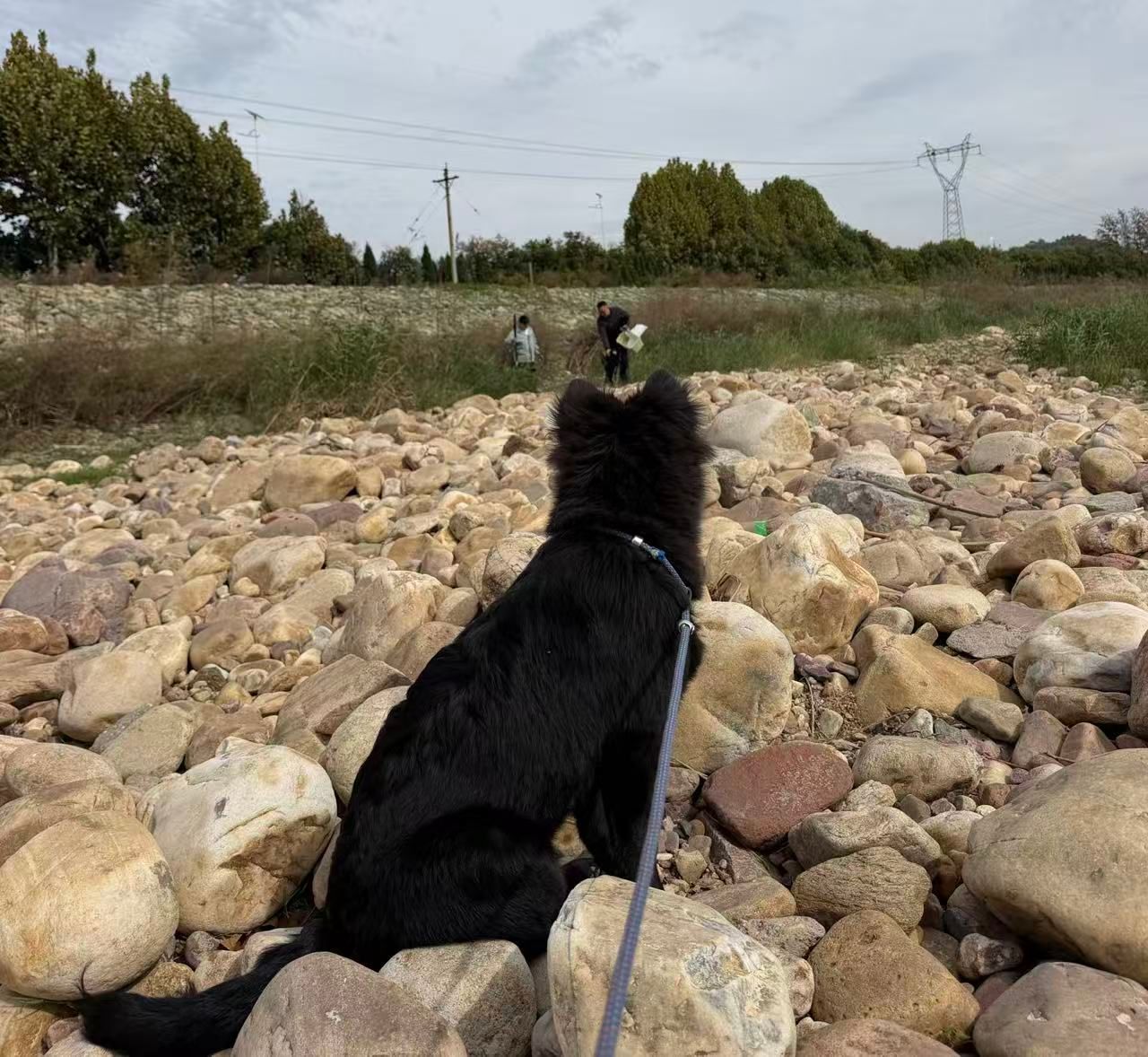
# My Dog Barked at Strangers by the River: What Helped on a Fishing Day
From the Qiqi's Growth Diary series
At the weekend, I took Qiqi along when my little human went fishing by the river. The water was calm, the rod was ready, and Qiqi was doing her usual patrol. Then a stranger walked past at a distance — and she barked. Not a tiny warning bark, but the kind that makes everyone on the riverbank turn around.
It was not a bad dog moment. It was a dog doing exactly what dogs do: noticing something new, feeling unsure, and using her voice.
Why She Barked at a Stranger by the River
River walks are full of triggers. There are new smells, open space, moving water, bicycles, other dogs, and people who appear suddenly from behind trees. For a young dog, that is a lot of information to process.
Qiqi barked because the stranger was unfamiliar, approaching, and inside what felt like her space. She was not trying to be rude. She was trying to manage a situation she did not fully understand.
Dogs often bark at strangers for one of these reasons:
- Uncertainty. The person is unknown, and the dog is not sure what will happen.
- Distance. The stranger is far away, so the dog cannot sniff or read them properly.
- Excitement. Some dogs bark because they want to greet, not because they are angry.
- Protective instinct. The dog feels responsible for the family, the spot, or the child nearby.
- Past reinforcement. If barking has made people move away before, the behaviour can become a habit.
What I Did in the Moment
I did not shout. I did not pull the leash hard. I did not tell her she was “bad.” None of that helps a dog feel safer.
Instead, I did three small things:
- I created space. We moved a few steps away from the path so the stranger could pass without coming straight toward us.
- I stayed calm. My voice stayed low and ordinary. Panic tells a dog the situation is dangerous.
- I rewarded quiet. When she stopped barking and looked back at me, she got a treat and gentle praise.
The goal was not to silence her instantly. The goal was to help her learn: new people can pass, and nothing bad happens.
What Helped After That Day
Keep greetings predictable
If a stranger wants to say hello, it helps to ask them to approach slowly, avoid staring, and let the dog choose whether to move closer. Forced greetings often make barking worse.
Use a simple cue
A calm “thank you” or “enough” can work better than a long explanation. Dogs respond better to short, consistent cues than to emotional speeches.
Practise at a distance
If your dog barks at strangers, start training where the triggers are far away. Reward calm behaviour. Over time, you can practise in slightly busier places.
Make walks part of the routine
Regular walks help a dog burn energy, feel more confident, and handle surprises with less stress. A tired, mentally settled dog is usually a quieter dog.
When Barking at Strangers Is a Vet Question
Occasional barking at new people is normal. But some signs mean it is worth speaking to a vet:
- The barking is new, sudden, or much louder than usual.
- It happens mainly when the dog is left alone.
- Your dog shows pacing, whining, drooling, or destructive behaviour.
- Your dog seems genuinely frightened, stiff, or unable to settle.
- The behaviour is getting worse despite calm, consistent training.
In those cases, a vet or qualified behaviour professional can help rule out pain, anxiety, or other underlying issues.
The Part Where We Sell Something
We make dog supplements, including products that support calm behaviour and overall wellbeing. That is the business behind this blog, so please read this with that in mind.
A supplement will not teach a dog how to feel safe around strangers by the river. Training, routine, and good management do most of the work. If a supplement helps, it is only a small, optional layer on top of those basics — never a substitute for them. If your dog has a health or behaviour problem, that is a vet’s call, not a label’s.
The best habit I can offer from the shop side is simple: read the label before you buy anything, including ours.